Email

Lung cancer remains one of the leading causes of cancer-related mortality worldwide. Despite advances in treatment, the overall survival rate remains low because most patients are diagnosed at advanced stages of the disease. Early detection and accurate risk stratification are critical for improving clinical outcomes and reducing mortality.


Low-dose computed tomography (LDCT) is the authoritative early screening method recommended by guidelines. However, the majority of detected nodules are benign, creating substantial challenges in clinical decision-making, follow-up management, and healthcare resource utilization. Therefore, reliable biomarkers that can assist in differentiating malignant from benign nodules and identifying individuals at high risk of lung cancer are increasingly important.


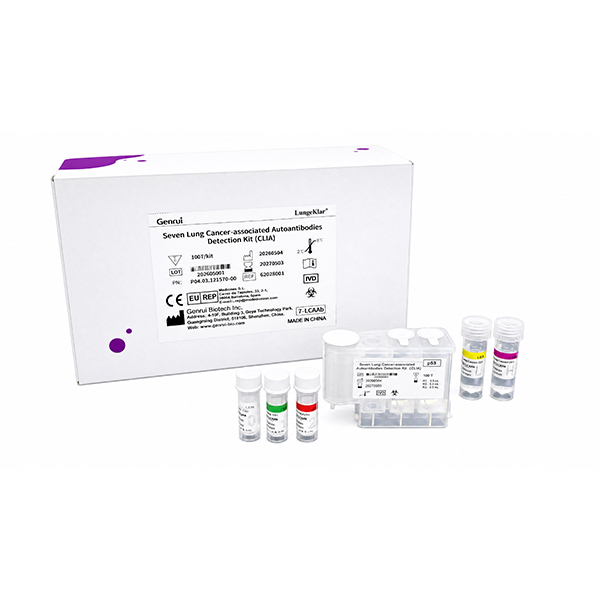
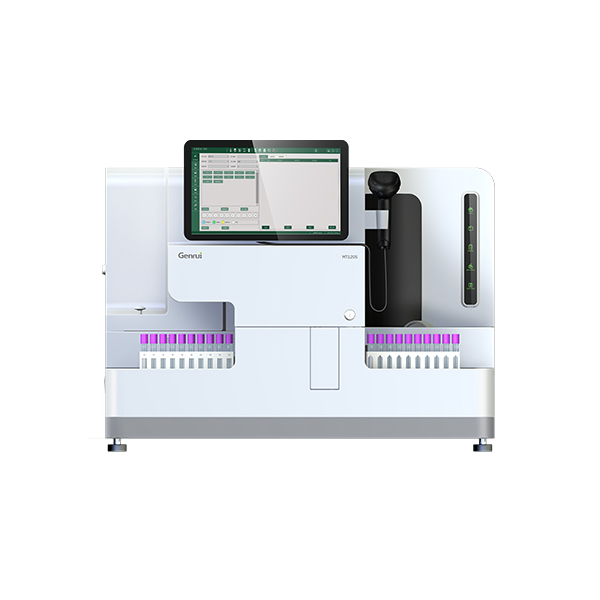
Genrui offers autoantibodies diagnostic reagent and corresponding platform to help Lung Nodule Risk Assessment.


What is the Lung cancer?

Lung cancer happens when cells in the lung change (or mutate). Unlike normal cells, cancer cells grow uncontrollably and cluster together to form a tumor, destroying healthy lung tissue around them. 


Symptoms

In the early stages, lung cancer often develops silently without obvious clinical symptoms, which makes early detection particularly challenging. When symptoms do appear, the disease is frequently already in an advanced stage. Common symptoms may include persistent cough, chest pain, shortness of breath, coughing up blood, unexplained weight loss, and recurrent respiratory infections.


Causes and Risk Factors

Smoking remains the leading cause of lung cancer and is responsible for the majority of cases worldwide. Both active smoking and long-term exposure to secondhand smoke significantly increase the risk of developing the disease. However, lung cancer can also occur in non-smokers. In these cases, contributing factors may include environmental pollution, occupational exposure (such as asbestos or radon), genetic susceptibility, and other unknown mechanisms. In many patients, no clearly identifiable cause can be determined.


Autoantibodies detection in lung cancer

The invasive or indolent tendency of tumor biological activity reflected by tumor immune response signals, thereby indicating the possibility of tumor malignant transformation.


During tumorigenesis, abnormal proteins (tumor-associated antigens) may be expressed, triggering an immune response that leads to the production of specific autoantibodies.


These tumor-associated autoantibodies can reflect biological changes in tumor development and immune surveillance. Importantly, the invasive or indolent tendency of tumor biological activity reflected by tumor immune response signals, thereby indicating the possibility of tumor malignant transformation.


Genrui offers a Seven Lung Cancer-associated Autoantibodies Detection Kit and corresponding device - the Chemiluminescence Immunoassay Analyzer.


Get in Touch

We use experience and profession to offer IVD Solutions for our clients!

Contact Us contact